Why Small Games Teach Big Movement Ideas
Small games teach big movement ideas by changing space, direction, and rules, giving young players clear chances to scan, choose a route, and adapt.
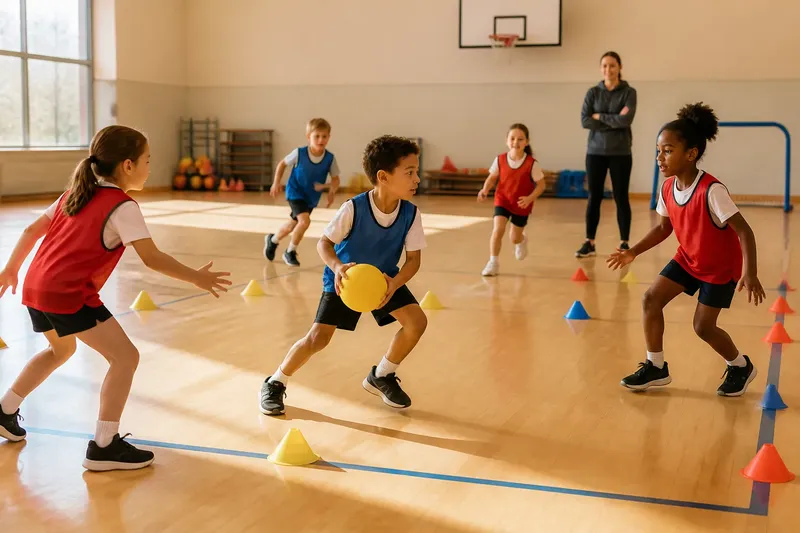
A narrow playing area makes a young player turn sooner; a wider one gives more room to run and look up. Small games teach big movement ideas by changing space, direction, and simple rules so children can notice what is happening and adjust their movement. Choose a version that invites the movement you want players to explore, rather than making every game harder.
Space changes the problem
In a compact area, players encounter teammates and opponents more often. They may need to brake, pivot, protect a ball, or find a short passing lane. In a larger area, they have more time to scan, accelerate, carry an object, or move into open ground. Neither shape is automatically better: each makes different options more visible.
Mark boundaries with cones, floor lines, or safe landmarks, and leave enough room for children to move without colliding with walls, equipment, or spectators. Adjust the playing area in small increments, then watch what players do. If everyone is crowded around the ball, widen the space or use fewer players. If the game loses its purpose because players are too far apart, bring the boundaries closer or add a clear target.
For a group learning to pass and move, a rectangle can create useful forward and sideways routes. A square may encourage turns in several directions. A long, narrow lane can invite running into space, but it can also funnel everyone into the same path; add a second route if congestion builds.
Choose the boundary for the movement opportunities it creates, not because a particular shape is traditional.
Direction guides attention
A goal or target gives movement a destination. With one direction of attack, players can begin to recognize where to advance, where to defend, and when to change pace. A game with two targets at opposite ends adds a decision: turn back, switch sides, or keep moving forward.
Direction can also come from a partner, a line to cross, or a zone to enter. For example, players might carry a beanbag to either of two safe zones. Because both destinations are available, they have to look before choosing a route. Keep the task simple enough that children can pay attention to people and space rather than spending the whole game remembering instructions.
Change direction by moving a target or opening a new route, rather than calling a new command every few seconds. This lets players respond to what they see. If the group keeps missing a target because it is difficult to locate, make the target more visible before making the movement challenge harder.
Rules shape movement
A small rule can bring a movement idea into view without prescribing every action. A rule that requires a player to touch a boundary before scoring may encourage a detour. A rule that allows scoring through either of two gates may invite players to look up and switch routes. A rule that gives a teammate a useful role can encourage passing and support movement.
Use one change at a time. If you shrink the area, add a new scoring rule, and change the equipment together, it becomes difficult to tell which part is helping or confusing the group. Start with a familiar game, introduce one clear adjustment, and allow children to play long enough to respond. Then keep it, remove it, or try a different adjustment.
Rules should create choices, not trap players in a single correct movement. Avoid rules that require a child to move in a way they cannot yet manage safely. For contact, equipment, and boundary decisions, follow relevant instructions and local rules.
Choosing an approach?
When should I make the space smaller?
Make it smaller when players have so much room that they rarely encounter a choice or interact with teammates. If the change produces crowding or collisions, restore space or reduce the number of players instead.
When does a larger area help?
A larger area can give players time to look around, choose a route, and build speed before reaching another player or target. It suits a group that needs room to explore movement, provided the boundaries remain clear and the game still has a recognizable aim.
Should I add another rule?
Add a rule only when you can name the movement opportunity it is meant to create. If players stop repeatedly to ask what to do, remove or simplify the rule before adding another.
Three playable approaches
These three setups focus on tight space, clear direction, or one movement-shaping rule. Use cones to mark boundaries and visible targets, explain the aim in a sentence, and adjust only one feature at a time.
- Tight-space turns: Mark a square with four cones and have a small group move a soft ball or beanbag between players inside it. If players rarely turn or find room, narrow one side slightly; if they bunch up or collide, widen the square or reduce the group.
- Two-target direction: Mark two visible gates at opposite ends of a rectangular area. Players carry or pass a ball toward either gate, choosing their route as play unfolds. If they keep looking up and switching routes, retain the setup; if the targets are hard to see or reach, move them closer and make them more visible.
- Boundary-touch rule: Set a clear boundary and one scoring target; before scoring, the ball carrier must touch a boundary cone with a hand or the ball, according to the group’s ability and safety rules. If players start using different routes, keep the rule; if it interrupts play or confuses them, remove it and return to the familiar game.
Imagine a beginner group in a crowded square, with one ball and one target. The coach starts with the current boundaries, then moves two cones apart while keeping the target and rules unchanged. Players now have a wider side route; the coach watches to see whether more players leave the crowd and turn toward open space. If they still bunch together, the next round can use fewer players rather than adding another rule at the same time.
Watch for useful signs
During play, look beyond whether a team scores. Notice if players lift their heads, change speed, turn into open space, or make room for a teammate. These are visible signs that the game is presenting movement choices. They do not need to happen on every turn for the game to be useful.
Also notice who is getting involved. A game that gives one confident player most of the action may need a change in space, teams, or rules so others can move and make decisions too. Rotate roles and offer different ways to contribute, such as carrying, passing, defending, or choosing a target. Keep the task active rather than turning each adjustment into a long explanation.
Ask one short question after a round: “Where was there room to move?” or “What helped you change direction?” Give children time to answer in their own words. Their responses can help you decide whether to repeat the game, adjust it, or move on.
Build variety with purpose
Small games work best as adaptable invitations, not miniature versions of a formal match. Keep the basic activity familiar while changing one feature: the size of the space, the direction of travel, or a rule that opens a new choice. That gives players a chance to recognize what has changed and try a different response.
For small games that teach big movement ideas, choose one movement question, make one clear adjustment, and watch what players do. If the game creates safe, lively chances to look, move, and adapt, let it continue; if not, change the space, direction, or rule that is getting in the way.