The Mistake of Treating Every Miss as a Setback
Learn how to respond to a missed attempt in youth sports with a calm pause and one useful observation, so the next try feels possible.
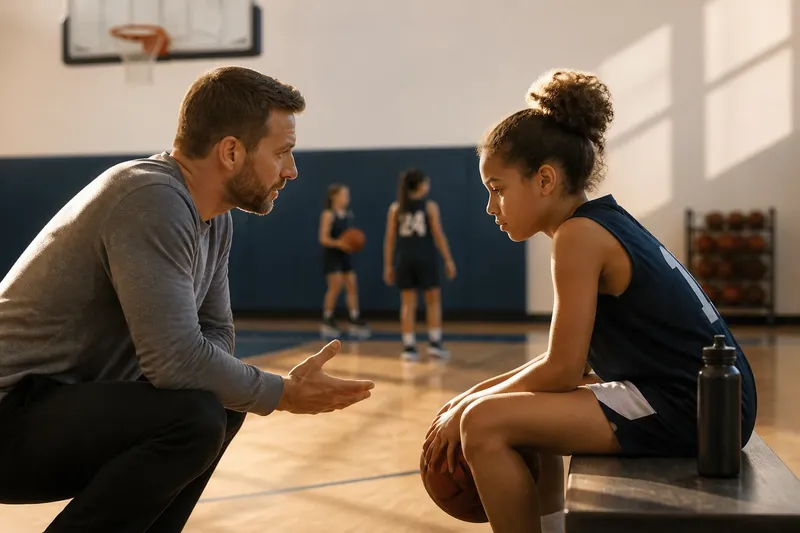
A missed shot, dropped catch, or late start does not tell you that a young athlete is failing. When a child misses in youth sports, an adult can help them notice one detail and approach the next try without turning the moment into a verdict.
The aim is not to pretend an error feels good. A child may be frustrated, embarrassed, or eager to move on. Make room for that feeling, keep your response small, and let the next attempt belong to the player.
Pause before responding
Give the moment a beat before offering advice. A quick stream of instructions can make a child feel watched just when they are trying to recover. Take a breath, soften your expression, and let the player decide whether to look your way.
If they seem upset, start with a plain acknowledgment: “That one didn’t go where you wanted.” Avoid dismissing the feeling with “It’s fine” or asking for an explanation while they are still reacting. A short pause communicates that a miss is not an emergency.
Keep your voice and posture relaxed as a parent on the sideline or a coach at practice. Don’t call attention to the error in front of teammates unless the player needs an immediate, simple cue to continue safely. Let play move on when that is what the child wants.
Read the child’s response
Before discussing technique, check whether the athlete is ready to think. Some children want a moment alone; others appreciate a quiet question such as, “Want to try again?” Accept a no, a shrug, or a change of subject. The next opportunity may come later.
Notice what the player is doing, not what you assume the miss means. Looking away may signal embarrassment, but it may also mean they are following play. If you are unsure, ask rather than interpret: “Would you like a suggestion, or would you rather keep playing?”
This choice gives the child a manageable way to rejoin the activity. It also prevents a helpful intention from becoming a postgame interrogation. Keep the conversation brief enough that the athlete can return attention to the field, court, or play area.
Choose one observation
When the child is ready, describe one visible detail from the attempt. Choose something neutral and specific, such as where the eyes were directed, when the player began moving, or where the ball traveled. Avoid labels like “careless,” “bad,” or “not athletic”; those judge the person rather than describe the action.
Say, “I noticed your hands were ready before the ball arrived,” or, “The ball went wide of the target.” Then stop. Several corrections at once can be hard to use, and a long explanation can make the miss seem bigger than it is.
Do not guess at a cause you could not see. “You weren’t concentrating” assigns a motive; “You turned toward the sideline as the pass came” points to an observable moment. The child may have a different account, and listening can sharpen what you notice next.
Connect it to another try
Turn the observation into one small option, not a promise of success. Ask, “What would you like to try on the next one?” If the player is unsure, offer a single cue they can remember while moving, such as watching the ball into their hands or beginning the run a little earlier.
Say you are watching a young player practice free throws, and one attempt lands short. After a pause, you might say, “That one came up short. Want to focus on a smooth finish on the next shot?” The player tries again, and you notice whether the arm continues forward after release. Whatever happens to the next shot, that observable detail gives you a useful place to continue—or a reason to let the player simply play.
Keep the cue connected to the action rather than the outcome. “Make this one” adds pressure without telling the athlete what to do. “Finish your arm toward the target” gives attention somewhere specific to go.
Questions about responding to misses?
Should I correct every miss?
No. If the child is still playing and the miss has not interrupted participation, you can let it pass. Save feedback for a moment when the athlete is receptive and one useful observation is clear.
What if my child gets upset?
Acknowledge the feeling and give them time rather than insisting they try again immediately. If they want to stop, help them step away calmly and talk later, when the emotion has eased.
How can I avoid sounding critical?
Describe what you saw instead of judging effort, character, or talent. Ask permission before giving a cue, and make clear that the child can choose what to try next.
Should I praise the next attempt?
Respond to something real and specific, such as staying ready or choosing to try again. Avoid praising only a successful result; effort and a useful adjustment can matter even when the outcome is still a miss.
Let the moment end
After the next attempt, resist reopening the first miss. If the player made an adjustment, name the action you noticed; if not, keep playing and watch for another natural chance. Don’t demand an explanation or turn the moment into a lesson they must perform for you.
The most useful response to a missed attempt is often modest: pause, notice one detail, and leave the next decision with the child. In youth sports, treating a miss as information rather than a setback makes room for confidence to grow through participation, not perfect results.