A First Team Practice, Seen Through a Newcomer’s Eyes
A first team practice feels easier when a young player knows what to notice, who to ask, and how to join in at a comfortable pace.
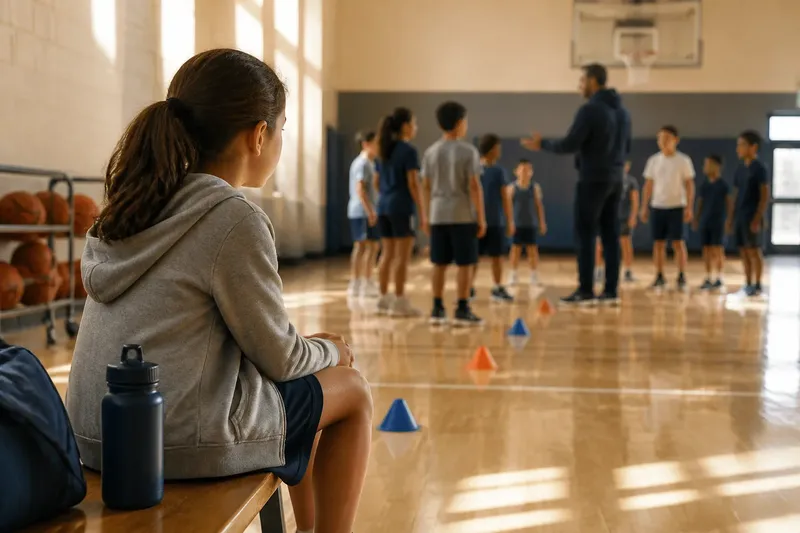
A first team practice is easier to enter when a young player has a few simple things to notice before being asked to perform. The first visit does not need to be a test of talent or confidence; it can be a chance to learn names, recognize how the session flows, and choose one detail to watch before joining in.
Parents and coaches can help by making the plan visible without turning it into a script. The ideas below give a newcomer room to observe, ask questions, and take part in manageable ways. A child can move through them at their own pace; some may happen naturally before practice even begins.
1. Agree on a small first goal
Before leaving home, agree on one modest goal that does not depend on scoring, winning a drill, or impressing the team. It might be learning the coach’s name, finding where players leave their water bottles, or watching how teammates take turns. A small goal gives the visit a clear center while leaving plenty of room for the session to unfold.
Ask the child what would make the first practice feel a little less unfamiliar. If they cannot think of an answer, offer two choices rather than a long list. “Would you rather find out where to stand or learn one teammate’s name?” is easier to answer than “What are you nervous about?”
Keep the goal flexible. If the chosen detail is not easy to spot, the child can choose another. The point is to give attention somewhere useful, not to add another demand.
Pick one thing to notice, not a performance target.
2. Arrive with room to settle
Arriving with a little time to spare can give a newcomer a chance to see the space before the group gathers. Find the entrance, the team’s meeting spot, and a place for personal belongings. If practice is at a field, gym, rink, or court the child has not visited, point out the areas they will actually use rather than giving a full tour.
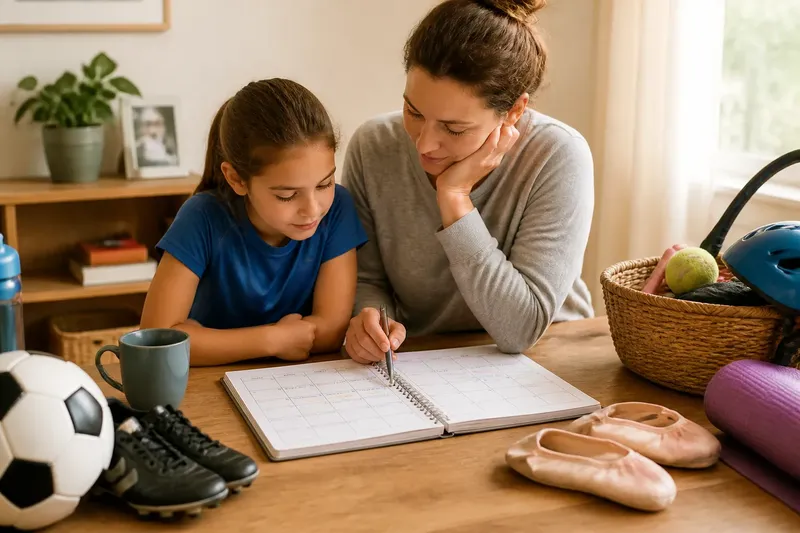
Check what clothing and equipment are needed before setting out. A labeled water bottle, comfortable layers, and any required personal gear can reduce last-minute searching. Follow the team’s instructions about equipment and clothing; where a choice depends on safety requirements or local rules, ask the coach or organization before practice.
When you arrive, avoid rushing the child straight into a group that is already warming up. Pause where the coach can see you, then ask where a newcomer should wait. A calm first minute can make the next instruction easier to hear.
3. Learn names without a quiz
Names help a new player feel that the group has people in it, not just unfamiliar faces. Start with the coach or the person who greets the team. A parent can quietly repeat the name with the child, but the child should not be pressed to memorize everyone before practice begins.
A natural introduction can be brief: “Hi, I’m Maya. Is this where the team meets?” That gives the other person an easy way to respond and also confirms the right place to stand. If the child prefers, a parent can introduce them first and let them add their name when ready.
During practice, the child can listen for names used in ordinary instructions. A coach might say, “Jordan, take the next turn,” or a teammate might call to a partner. Hearing a name attached to a face can help it stick. There is no need to stop the session to test recall.
Remembering one name is a real beginning.
4. Find the session’s shape
Many practices move through recognizable parts, even when the activities differ: players gather, warm up, work on a skill, play a game or drill, and finish with a brief team check-in. A newcomer does not need to know the sport’s full vocabulary to notice these transitions. The coach may signal a change by gathering players, explaining a new activity, or moving equipment.
Watch where the group looks when instructions begin. Notice whether players stand in a circle, line up behind cones, pair off, or spread across a playing area. These patterns offer useful clues about where to go when it is time to join. If the coach gives directions that are hard to follow, it is fine to ask for a quick repeat.
Some sessions will not follow a neat sequence. A team may spend longer on one activity or move between stations. The newcomer’s task is not to predict every change, but to notice how the coach tells players what happens next.
5. Choose one detail to watch
Watching is more useful when the child has one specific detail in mind. Choose something visible and small, such as how players take turns, where they stand before a drill begins, or what a teammate does after passing the ball. Avoid asking the child to track several rules at once. One detail leaves attention free for the coach’s instructions and the general feel of the group.
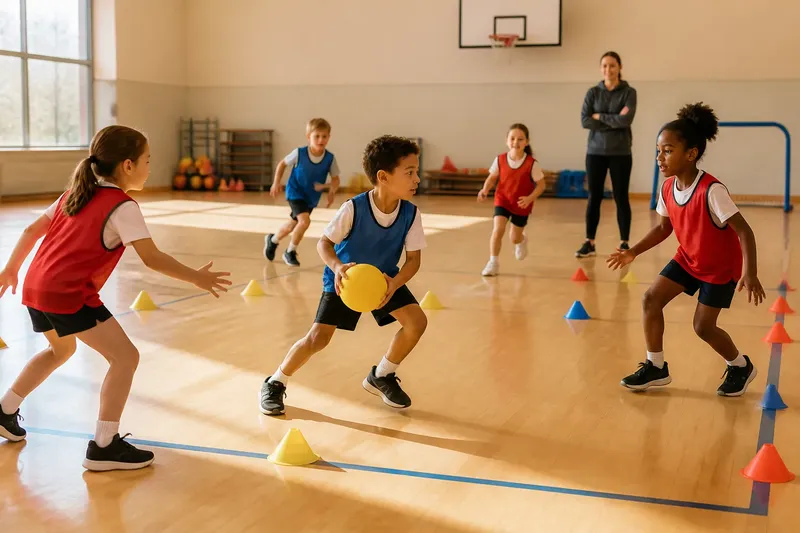
Say you are helping a child who has never joined a basketball practice. Before the group starts a passing activity, the child chooses to watch how a player knows when to move to the next spot. They notice that players follow the pass and rotate, then ask the coach whether that pattern applies to their turn. The child has learned one practical cue before being expected to remember the whole drill.
Use neutral questions afterward: “What did you notice?” or “What helped you know where to go?” If the child says they are unsure, accept that answer. Observing is an invitation to take part, not a hidden lesson with a correct response.
6. Join through a clear invitation
When it is time to participate, a newcomer benefits from knowing where to begin. The coach can pair them with a welcoming teammate, show them the starting position, or explain the first turn in a short sentence. A parent can help by asking the coach how newcomers are brought into activities, then step back so the child can engage directly when comfortable.
In a drill, the child may need to know only the immediate action: stand behind a marker, wait for the signal, then pass to a partner. Long explanations can make a simple activity sound more complicated than it is. If an instruction is unclear, a child can ask, “Where should I start?” or “Who goes after me?”
Some children want to join right away; others need to watch one round first. Both responses can fit a first visit. The coach should explain the activity and offer a reasonable way to enter without making observation feel like a failure.
7. Keep questions easy to ask
New players often have practical questions that are easy to miss in the noise of practice. They may wonder where to wait, when to take a turn, whether to retrieve equipment, or how to signal that they need a break. A child can choose one short phrase in advance, such as “Can you show me?” or “Where do I go next?”
Adults can make questions feel ordinary by asking them themselves when needed. A parent might check which entrance to use, while the child asks the coach where to put a jacket. Keep the exchange brief and matter-of-fact. The goal is to make clarification part of participation, not a spotlight moment.
If a child is too overwhelmed to ask during an activity, they can speak to the coach before practice, during a natural pause, or afterward. The right moment depends on the session, so agree on a simple signal with the coach if the child needs one.
8. Notice comfort as well as effort
After practice, ask what felt understandable, welcoming, or confusing. These questions make room for the child’s whole experience, not only the parts they performed. A young player may enjoy meeting one teammate while still finding the drills hard to follow. Both observations can be true at the same time.
Listen before offering advice. If the child says the room felt loud or the instructions came quickly, ask what might help next time: arriving with the coach’s meeting point already known, standing where they can hear, or asking for a demonstration. Avoid turning the ride home into a detailed review of every missed cue.
One useful next-time plan is enough. It might be to greet the teammate they met, remember where to line up, or ask for a demonstration of the opening activity. Keep it small enough that the child can carry it into practice without feeling responsible for the whole session.
9. Check the fit after the visit
A first practice offers information about the team’s environment as well as the activity. Consider whether the coach explained what to do, whether newcomers had a way to ask questions, and whether the child could take part at a reasonable pace. A child does not need to master a sport on the first day to have a worthwhile experience.
If the session felt confusing, identify what was unclear before deciding what to do next. The child may need a more direct introduction, a clearer explanation of the routine, or another visit to become familiar with the space. If they felt uncomfortable or do not want to return, take that seriously and discuss options without pressuring them to commit.
A first team practice is a meeting with a new group, not a verdict on a child’s ability. Help them leave with one familiar name, one clearer picture of the session, and one small thing they might try next time. That is enough to make the next arrival feel more recognizable.